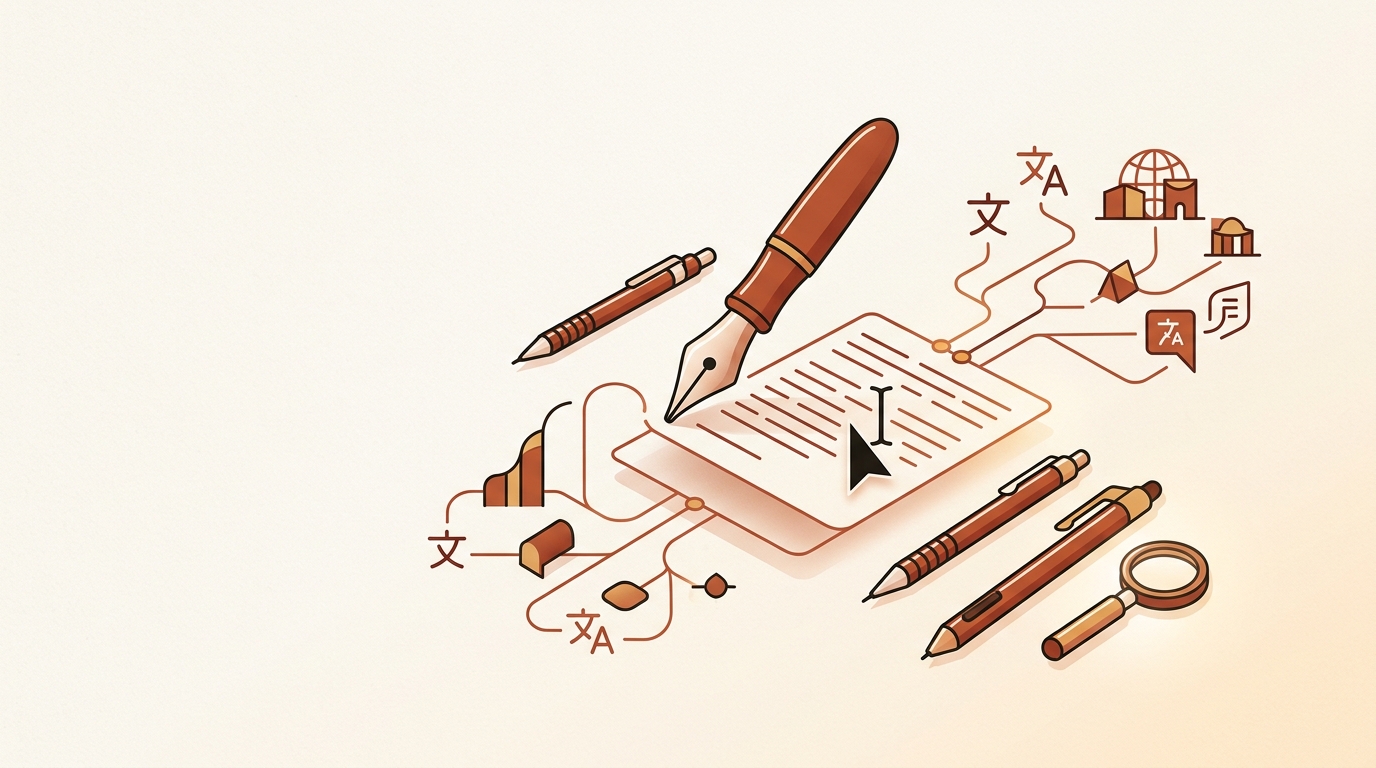
Breaking Language Barriers: A Guide to AI Translation Tools

The Evolution of AI Translation
AI translation has advanced dramatically from the early days of word-by-word conversion. Modern neural machine translation understands context, idioms, and nuance in ways that were impossible just a few years ago. However, the technology still has limitations that users must understand.
How AI Translation Works
Neural Machine Translation
Modern AI translators use neural networks that:
- Analyze entire sentences for context
- Learn patterns from billions of translated texts
- Consider word relationships and grammar
- Adapt to different styles and registers
Key Improvements Over Traditional Methods
- Better handling of idioms and expressions
- More natural-sounding output
- Improved accuracy for complex sentences
- Better preservation of meaning and tone
When AI Translation Excels
Ideal Use Cases
- General correspondence and communication
- Understanding foreign language content
- Translating straightforward informational text
- Getting the gist of documents quickly
- Common language pairs with abundant training data
Languages with Best Results
Translation quality is typically highest for:
- English to/from major European languages
- English to/from Chinese, Japanese, Korean
- Between languages with similar structures
- Well-resourced languages with extensive training data
Limitations to Understand
Contextual Challenges
- Cultural references may not translate well
- Humor and wordplay often fail
- Technical jargon requires specialized knowledge
- Regional dialects and slang can be problematic
Accuracy Concerns
- Subtle meaning shifts can occur
- Formal vs. informal tone may not transfer
- Gendered language creates challenges
- Rare language pairs have lower quality
Best Practices for AI Translation
Before Translating
- Write clear, simple source text when possible
- Avoid idioms and culture-specific references
- Use standard terminology
- Break long sentences into shorter ones
During Translation
- Translate complete thoughts, not fragments
- Provide context when available
- Use translation memory for consistency
- Consider multiple translation options
After Translating
- Have native speakers review important content
- Back-translate to check accuracy
- Verify technical terms independently
- Test for cultural appropriateness
Use Cases by Context
Business Communication
- Email correspondence—generally suitable with review
- Marketing content—requires significant human refinement
- Legal documents—professional translation essential
- Technical documentation—verify terminology carefully
Academic and Research
- Understanding foreign sources—helpful for initial comprehension
- Publishing translations—requires professional quality assurance
- Collaborative research—useful for communication, verify critical terms
Personal Use
- Travel and tourism—generally reliable for basic needs
- Social communication—adequate for casual conversations
- Learning languages—helpful tool but not a replacement for study
Improving Translation Quality
Write Translation-Friendly Source Text
- Use active voice
- Avoid ambiguous pronouns
- Define acronyms and abbreviations
- Use consistent terminology
- Keep sentences concise
Leverage Available Features
- Use glossaries for consistent terminology
- Specify target audience and formality level
- Provide context or domain information
- Use translation memory for repeated content
Ethical Considerations
When Not to Rely Solely on AI
- Legal or contractual documents
- Medical information
- Official communications
- Published content
- Sensitive cultural or political topics
Respecting Language and Culture
- Recognize that translation is more than word conversion
- Value human translators' cultural expertise
- Be aware of potential bias in AI systems
- Consider the impact of translation choices
Conclusion
AI translation tools are powerful resources for breaking down language barriers, but they work best when users understand their capabilities and limitations. By following best practices and knowing when human expertise is needed, you can communicate effectively across languages while avoiding costly misunderstandings.
StealthWriter Multilingual Support
StealthWriter supports content creation and detection in 18 languages:
- AI Detection - Works across all supported languages
- Grammar Checker - Available in multiple languages
- Content Rewriter - Transform content in any supported language
Break language barriers with StealthWriter's multilingual tools.
Related Articles
- Master Content Rewriting Guide
- The Art of Paraphrasing
- Grammar Checking Excellence
- Summarize Documents with AI
- 10 Tips for Original Content
Complete Your Writing Toolkit
StealthWriter offers a full suite of AI-powered writing tools to elevate your content:
- Grammar Checker - Catch errors and improve writing clarity
- Paraphrasing Tool - Restate ideas with fresh perspectives
- Content Rewriter - Transform and restructure your content
- Text Summarizer - Condense long documents into key points
- AI Translator - Translate content across 18+ languages
- AI Detector - Verify your content authenticity
Frequently Asked Questions
How does AI translation work?
Modern AI translation uses neural machine translation, which processes whole sentences in context rather than word by word. This produces more fluent, natural results than older methods. The guide explains that these improvements handle grammar and phrasing better, though contextual and cultural nuance still requires human review.
When does AI translation work best?
AI translation excels for straightforward, well-written source text in widely supported languages and for general communication. The guide lists ideal use cases and notes that clear, simple source text improves results. It works less well with idioms, cultural nuance, and specialized content, where accuracy concerns call for human review.
What are the limitations of AI translation?
AI translation faces contextual challenges and accuracy concerns, especially with idioms, cultural references, tone, and specialized terminology. The guide advises not relying solely on AI for sensitive or high-stakes material. Review translations, respect language and culture, and involve a human translator when precision or nuance truly matters.
How can I improve AI translation quality?
Write translation-friendly source text using clear, simple sentences, and leverage available features before, during, and after translating. Reviewing output and providing context reduces errors. The guide's best practices split the workflow into preparation, translation, and post-editing so you catch mistakes and refine phrasing for the target audience.
When should I not rely solely on AI translation?
Avoid relying solely on AI translation for legal, medical, or culturally sensitive content where errors carry real consequences. The guide stresses respecting language and culture and involving human translators for such cases. Use AI for speed and general understanding, then have a qualified person verify important translations.
Share
Related Posts
Writing Tools
Summarizing lengthy documents is a critical skill in our information-rich world. Whether you are a student processing research papers, a professional reviewing reports, or a content creator condensing information, AI summarization tools can dramatically improve your efficiency. This guide shows you how to use these tools effectively.
Nov 18, 2025
Writing Tools
Good grammar is the foundation of effective communication. Whether you're writing an email, a blog post, or an academic paper, grammatical errors can undermine your credibility and confuse your readers. This guide explores how to leverage grammar checking tools to produce polished, error-free content.
Nov 12, 2025
Writing Tools
Paraphrasing is a fundamental skill that every writer needs to master. It involves restating someone else's ideas in your own words while maintaining the original meaning. This guide will teach you the techniques and best practices for effective paraphrasing, whether you're a student working on research papers or a professional creating content.
Nov 8, 2025