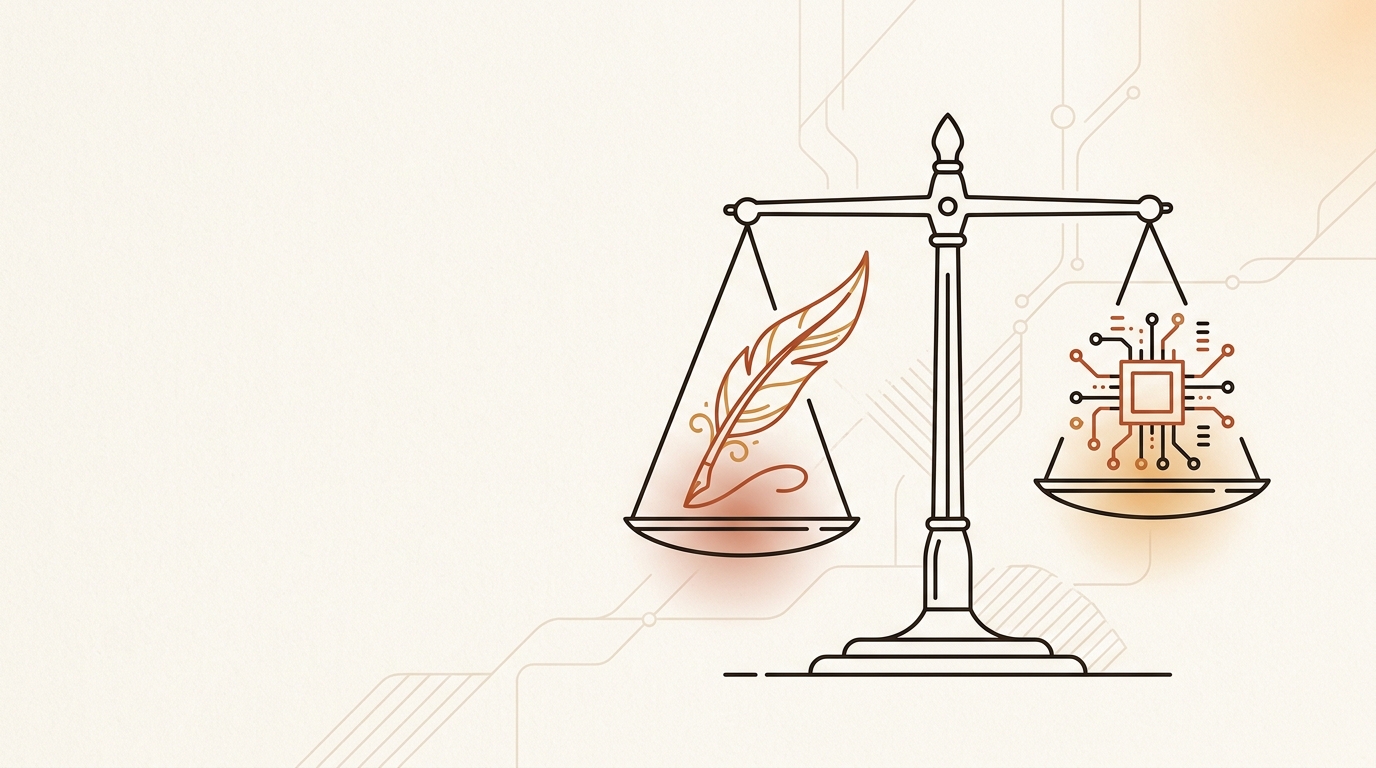
Balancing AI Innovation with Ethical Responsibility

The Innovation-Ethics Balance
As AI technology advances rapidly, we face a fundamental challenge: how do we embrace innovation while maintaining ethical standards? This balance is crucial for sustainable AI development and adoption.
Why Ethics Matter in AI
AI systems make decisions that affect real people. Without ethical guardrails:
- Bias can be amplified at scale
- Privacy can be compromised
- Misinformation can spread faster
- Human creativity may be devalued
Frameworks for Ethical AI Use
1. Transparency
Be open about when and how AI is used. Users deserve to know if content was AI-assisted.
2. Accountability
Take responsibility for AI outputs. Human oversight remains essential even with advanced AI.
3. Fairness
Ensure AI systems don't discriminate or create unfair advantages.
4. Privacy Protection
Respect user data and implement strong privacy safeguards.
Ethical AI in Content Creation
For content creators, ethical AI use means:
- Using AI as a tool, not a replacement for human creativity
- Being transparent about AI assistance when appropriate
- Verifying AI-generated information for accuracy
- Maintaining your authentic voice and perspective
The Role of AI Detection
Tools like StealthWriter AI Detector play an important role in the ethics ecosystem by:
- Helping maintain authenticity standards
- Supporting academic integrity
- Enabling informed decisions about content
Moving Forward Responsibly
The goal isn't to restrict AI innovation but to guide it toward positive outcomes. By establishing clear ethical principles, we can:
- Build trust in AI-assisted content
- Protect human creativity and jobs
- Ensure AI benefits society broadly
StealthWriter's Ethical Commitment
At StealthWriter, we design our tools with ethics in mind:
- Our AI Detector supports transparency
- Our AI Humanizer enhances human creativity, not replaces it
- Our writing tools assist while keeping humans in control
Explore our tools and join us in promoting responsible AI use.
Building an Ethical AI Framework for Your Organization
Step 1: Audit Current AI Usage
Most organizations underestimate how much AI is already embedded in their workflows. Conduct a thorough audit: which teams use AI tools? For what purposes? What content is AI-assisted vs. AI-generated? This baseline understanding is essential before setting policies.
Step 2: Define Acceptable Use Guidelines
Create clear, practical guidelines that distinguish between different levels of AI involvement:
- Level 1 — AI-assisted: Human-written content refined with AI tools (grammar checking, paraphrasing). Minimal disclosure needed.
- Level 2 — AI-augmented: Content drafted with significant AI help but substantially edited by humans. Internal disclosure recommended.
- Level 3 — AI-generated: Content primarily created by AI with human review. Full disclosure required.
Step 3: Implement Verification Tools
Use AI detection tools as part of your content quality assurance process. This is not about catching wrongdoing—it is about maintaining standards and building trust. Regular detection scans help content teams calibrate their AI usage and ensure output meets quality benchmarks.
Step 4: Foster a Culture of Transparency
The organizations that will thrive in the AI era are those that view AI as a tool to be proud of using, not something to hide. Encourage teams to share how they use AI, what works, and what does not. This openness leads to better practices and prevents the ethical drift that comes from secrecy.
Case Study: Responsible AI in Practice
A mid-size marketing agency implemented the following workflow: content strategists use StealthWriter Writing Assistant for first drafts, writers add expertise and brand voice, editors verify with AI Detector, and published content includes a footer noting "This article was created with AI assistance and human expertise." The result: 40% faster production, maintained quality scores, and improved client trust.
Related Articles
- Ethics of AI Detection in Education
- Copyright and AI-Generated Content
- Balancing AI Innovation with Ethics
- AI Transparency and Disclosure
- Ethical Guide to AI Content
Responsible AI with StealthWriter
StealthWriter is committed to ethical AI use. Explore our tools designed with integrity in mind:
- AI Detector - Promote transparency with accurate AI content detection
- AI Humanizer - Ethically refine AI-assisted content
- Writing Assistant - Create content responsibly with AI guidance
- Citation Generator - Properly attribute sources and ideas
- Our Mission - Learn how we promote responsible AI use
Frequently Asked Questions
How do you balance AI innovation with ethical responsibility?
Balancing AI innovation with ethical responsibility means adopting new tools while setting clear guardrails around transparency, accuracy, and accountability. Organizations pair experimentation with defined acceptable-use guidelines and verification tools. StealthWriter frames this balance around responsible use: gaining AI's speed and scale without sacrificing honesty, author voice, or trust in your content.
Why do ethics matter when using AI for content creation?
Ethics matter in AI content creation because unchecked use can spread inaccuracy, erode audience trust, and blur authorship. Ethical practices keep humans accountable for what they publish, ensure disclosure where appropriate, and preserve quality. Treating AI as an assistant rather than a ghostwriter protects credibility and aligns content with integrity standards over short-term output gains.
What is an ethical AI framework for an organization?
An ethical AI framework is a structured set of policies guiding responsible AI use. A practical approach follows four steps: audit current AI usage, define acceptable-use guidelines, implement verification tools like AI detection, and foster a culture of transparency. This framework keeps innovation accountable and helps teams use AI consistently without compromising quality or honesty.
What role does AI detection play in responsible AI use?
AI detection supports responsible AI use by giving teams visibility into how content is produced, helping verify disclosure and quality standards. It is a checkpoint, not a punishment: detection tools like StealthWriter's help organizations confirm content aligns with their acceptable-use guidelines and catch cases where AI output needs human review or clearer attribution.
How can teams build a culture of transparency around AI?
Teams build transparency by openly documenting where and how AI is used, defining clear disclosure norms, and encouraging honest conversations rather than hidden workflows. Auditing usage and adopting verification tools reinforces these habits. StealthWriter positions transparency as foundational to responsible AI, treating openness about AI assistance as a trust-builder rather than a liability.
Share
Related Posts

AI & Ethics
Understanding the importance of AI transparency and how proper disclosure builds trust with your audience.
Dec 8, 2025
AI & Ethics
The intersection of artificial intelligence and copyright law presents unprecedented challenges for content creators. Who owns AI-generated content? Can it be copyrighted? What are the legal risks? This comprehensive guide explores these questions and provides practical guidance for creators navigating this evolving landscape.
Oct 20, 2025
AI & Ethics
As AI content detection tools become increasingly prevalent in educational institutions, important ethical questions arise. How do we balance the need for academic integrity with student privacy? What are the implications of false positives? This article explores the complex ethical landscape of AI detection in education.
Oct 12, 2025